Posts

Culture: Language

Image
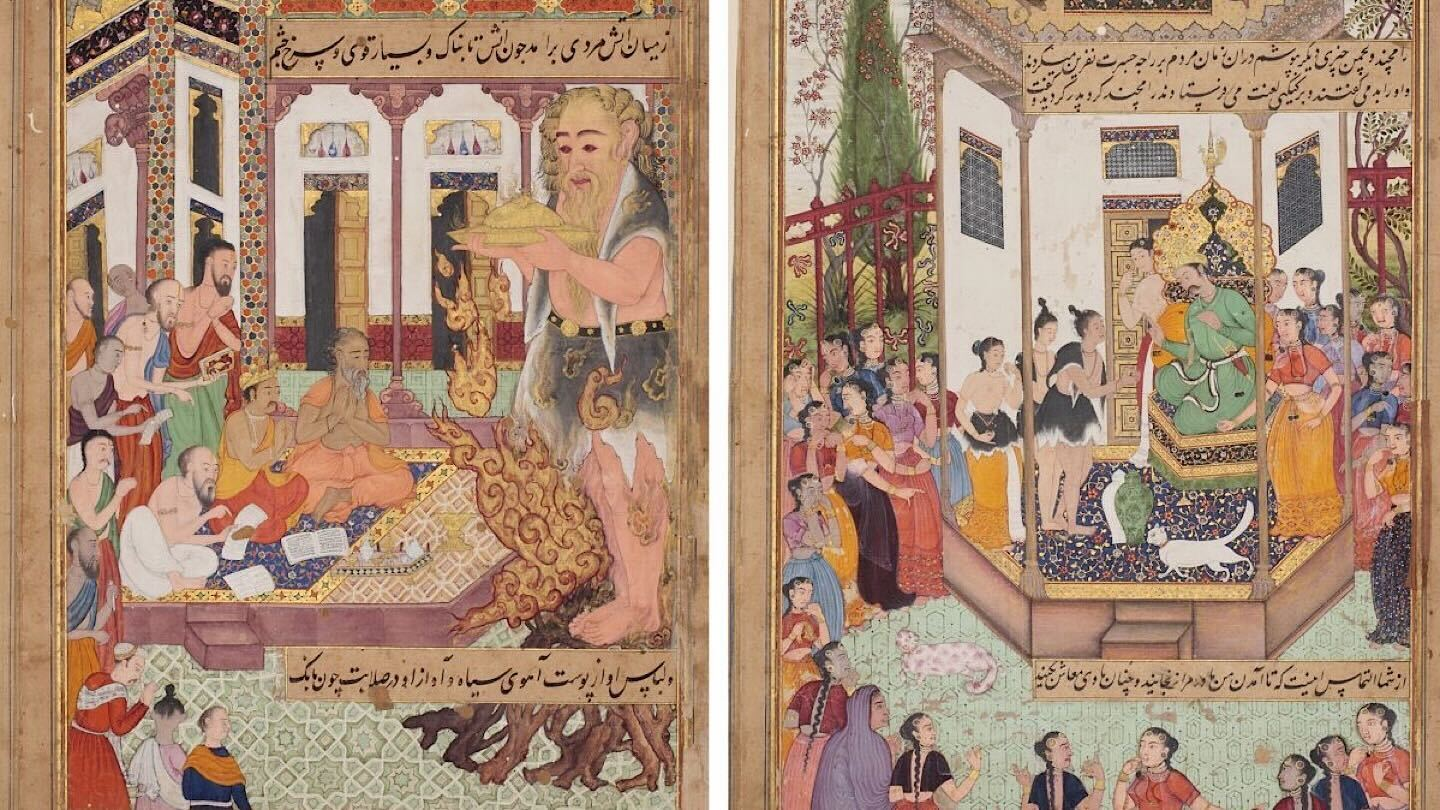
  LANGUAGE OF THE PARSIS By SUDITI UNIYAL Persian, one of the oldest languages in the world, is directly related to the Indo-European language and is said to be a branch of the language. “It was the language of the people who ruled Iran” (Banoo, 2017, 2). When the Arabs annexed Persia, they failed to impose Arabic as the official language. The people were forced to learn the Arabic script but Persian became a cultural language. In the mid 7th century, many Parsis came to Gujarat to escape religious persecutions. This is how the language first emerged in the country. In the 11th century, the Ghaznavid conquests further spread Persian language across and encouraged the continuous flow of soldiers, scholars, travelers etc., into the country for centuries. For a long time, it was used in South Asia, and was an important official language especially during the Mughal period, under powerful rulers like Akbar. Amit Dey, a senior historian, wrote that although their native language was Tu...

How the Parsis contributed to Deterritorialization

Image
Deterritorialization   By ADVAITH MANHOLI Deterritorialization is the process of something losing its original connection to a specific place, culture, or identity, becoming more fluid and mobile. It often refers to the breaking of boundaries and structures, allowing things like ideas, practices, or people to move and adapt in new contexts. This article aims to understand how the Parsi community contributed to deterritorialization within India. Historically Parsis were uprooted from Persia which led to their cultural and territorial connections breaking down. Despite being in a new land, they maintained core elements of their religious and cultural identity, balancing deterritorialization with preservation They did this by assimilating aspects of Indian culture with their own traditions. This blending of Persian Zoroastrian and Indian cultural elements is a prime example of deterritorialization, where they adapted to a new social, political, and economic environment. Examples inclu...

Power and position: What was the social standing of Parsis in India

Image
SOCIAL STRUCTURE By Jaya Srivalli Bandi Though the size of Parsis is relatively small compared to the pre colonial period, their presence in India has definitely become a boon. https://www.npr.org/2012/09/05/160401322/vanishing-vultures-a-grave-matter-for-indias-parsis ECONOMIC CONTRIBUTION: The prominence of Parsis rose as they emerged as notable industrialists and entrepreneurs during the British colonial era in India. They established many businesses which include shipping, automobiles, textiles and various other sectors. They made substantial enhancements in establishing many foundations like Tata group, Godrej, Cafe Irani chai etc. They also contributed to our Economic success by involving in various other sectors like science, trade, education etc. https://www.uniindia.com/~/tata-motors-accelerates-innovation-record-222-patents-filed-and-333-grants-secured-in-fy24/Business%20Economy/news/3186645.html https://www.outlookbusiness.com/corporate/godrej-properties-opens-taj-the-trees-...

Occupation of the Parsis

Image
OCCUPATION By SUDITI UNIYAL It has been seen that Iranian immigration to India came in waves. There is plenty of evidence which suggests that Parsis were involved in agriculture and trade through the years. The emergence of the Mughal government resulted in an influx of ministers and many administrative workers, clerks, scribes, translators etc. Here it is important to note that there is no evidence of any sort of systematic immigration of peasants and nomads. “ Immigration to India from the Iranian plateau was mainly a concern of the elite. ” During the Mughal period, the Persians’ refined culture was truly advantageous as it helped in providing them patronage in royal courts (Haneda, 12, Vol. XIII, 82). Archaeological excavations revealed that the Parsis were involved in trade during the urban civilizations in and around the Indus valley. “Traces of boats along the Southern Gulf through the Persian gulf, remnants of Indus seals have been excavated at Kish, Ur and Susa in Iran.” Evi...

Laws for the Parsis

Image
LAWS FOR THE PARSIS by ARYAN TOPPO In order to create Parsi law, a Parsi law association was established in 1855. This association submitted a draft code on inheritance, succession, and matrimonial matters to the legislative assembly of India (India code, nd). The Parsi marriage and divorce act and the Parsi intestate succession act were passed into law in 1865, The Parsi marriage and divorce act 1865, 1936, (Amendment) 1940, and 1988. The Persian marriage and divorce act was later replaced by the act of 1936 (tutorialspoint, 2024) . The 1865 Act includes provisions such as: ~ Marriage validity:       1 .   A marriage is not valid if the couple did not reach the age requirement of 21 years; 2. A marriage is not valid if the couple is related to the same blood; 3. A marriage is not valid if it is not solemnized as the Parsis tradition or ceremony (Ashirvad). ~ Divorce: A person can only sue for divorce if the marriage was not executed within one year. 2. A ...